

Liability Insurance :: News
SHARE

Share this news item!

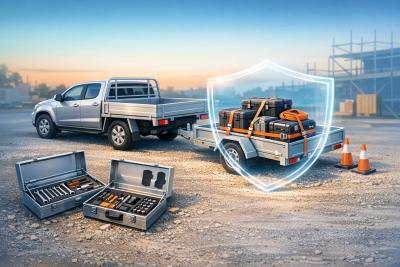
Stolen Tools Ruling Shows Why Policy Limits Matter

What tradies should check before gear leaves the depot

Stolen Tools Ruling Shows Why Policy Limits Matter?w=400

The information on this website is general in nature and does not take into account your objectives, financial situation, or needs. Consider seeking personal advice from a licensed adviser before acting on any information.

A recent Australian Financial Complaints Authority decision is a timely warning for trade businesses that rely on tools, trailers and mobile equipment every day.
The dispute centred on a business that had tools and a trailer stolen from a worksite, then challenged the insurer’s payout after discovering the claim was limited by the portable items section of the policy.

The business lodged its claim on 18 December 2025. QBE paid $14,000 for the stolen items in January 2026 and a further $9,446 for business interruption, assessed with the help of forensic accountants. The policyholder argued the loss was much higher, saying the stolen contents were worth about $120,000 and the trailer another $28,000. It also sought a larger business interruption payment.

The key issue was where the gear was located and how the policy defined it. The business believed its contents cover should apply, partly because different worksites could be treated as business premises. AFCA did not accept that argument. Because the stolen tools were not at the listed business location, the portable contents limit applied instead. AFCA also found the trailer was excluded because the policy did not cover motor vehicles, watercraft or aircraft under that section.

For tradies, the lesson is practical rather than technical: the headline sum insured is not always the amount available for every type of loss. A policy might show a large figure for business contents, but tools carried between jobs, left on site, stored in a vehicle or loaded in a trailer may sit under a separate limit, sub-limit or exclusion. That distinction can make a major difference after a theft.

Before renewing or buying tool insurance for tradespeople, business owners should check three things carefully:

  • whether tools are covered away from the main business premises;
  • the maximum payout for portable tools, stock and equipment;
  • whether trailers, vehicles, attachments and specialist gear need separate cover.

The case also shows why business interruption cover should not be treated as automatic compensation for every lost day. Insurers may assess downtime based on financial records, likely earnings and the actual impact of the theft on trading. Keeping up-to-date invoices, job schedules and expense records can make this process smoother.

If the wording is unclear, asking a broker or adviser to explain the difference between contents, portable property, tools of trade and vehicle-related cover can help avoid expensive surprises. For sole traders and small crews, the aim is simple: make sure the way the policy is written matches the way the business actually works on site.

Published:Monday, 6th Jul 2026
Author: Paige Estritori

Please Note: We do not endorse any specific products or companies. Some content is sourced from third parties, including press releases, and may not be independently verified for accuracy or completeness.

Share this news item:

Rate this article

0 Comments

No comments yet. Be the first to share your thoughts.

Insurance News

PSC Move Signals Stronger Competition in Transport Insurance Broking
07 Jul 2026: Paige Estritori
PSC Insurance Brokers’ investment in MA Insurance Brokers is a timely reminder that specialist transport insurance advice is becoming increasingly valuable in a tighter, more complex market. The deal, announced in late June 2026, sees MA begin operating as PSC Transport Insurance Brokers, while founders Barry Mathison and Mariann Illyes retain an equity stake and continue leading the business as managing principals. - read more
QBE’s Trade Pack Change Puts Renewals in Focus for Tradies
07 Jul 2026: Paige Estritori
QBE’s decision to stop offering its standalone office and trade pack products from July 2026 is a timely reminder for Australian tradies to treat every renewal as more than a simple rollover. The insurer is moving customers towards a standard business cover structure, with existing trade pack policyholders expected to be offered the replacement product at renewal from October 2026. - read more
Road User Charging Reform: What It Could Mean for Truck Operators
06 Jul 2026: Paige Estritori
Road user charging is moving from policy theory to a more serious industry conversation, with a new ITS Australia survey pointing to growing support for replacing fuel excise with a distance-based funding model. For transport operators, this is not just a tax discussion. It could change how fleets calculate running costs, compare vehicle types and plan margins on long-term freight contracts. - read more
Stolen Tools Ruling Shows Why Policy Limits Matter
06 Jul 2026: Paige Estritori
A recent Australian Financial Complaints Authority decision is a timely warning for trade businesses that rely on tools, trailers and mobile equipment every day. The dispute centred on a business that had tools and a trailer stolen from a worksite, then challenged the insurer’s payout after discovering the claim was limited by the portable items section of the policy. - read more


Business Insurance Articles

Public Liability Insurance Claims: What to Expect and How to Prepare
When it comes to navigating the complex waters of insurance, understanding public liability insurance claims is crucial for businesses and individuals alike. Public liability insurance serves as a safeguard, protecting against the financial repercussions that arise from accidents or injuries that occur on your premises or through your operations. In this introductory section, we will delve into the essence of public liability insurance and underline its significance. - read more
Freelancer or Employee? Understanding the Difference and the Liability Implications
The contemporary business landscape in Australia is witnessing a significant shift towards the gig economy, with a growing number of professionals opting for the flexibility and autonomy that freelancing offers. This trend has not only revolutionized the way work is performed but has also introduced new dynamics in the legal distinctions between freelancers and traditional employees. - read more
How to Choose the Right Public Liability Insurance for Your Business
Public liability insurance is a key consideration for business owners in Australia. This type of insurance helps protect businesses against claims made by third parties for injuries or property damage. But what exactly does it do? In simple terms, public liability insurance covers legal costs and expenses, as well as any damages awarded, if your business is found liable for an incident. - read more
The Cost of Being Uninsured: Why Every Australian Small Business Needs Liability Coverage
Welcome to the complex world of running a small business in Australia where navigating through liability risks is as crucial as managing daily operations. This article is crafted to illuminate why every Australian small business needs liability coverage — a shield to protect against potential financial catastrophes. - read more


Start Here !
Start here!
Cover Amount:
Postcode:

All quotes are provided obligation-free by a participating broker from our national referral partner network. We respect your Privacy.


Knowledgebase
Insurance Premium:
The periodic amount paid for the purchase of insurance.