Silica Duties Are Now an Insurance Issue for Trade Businesses
Why dust controls, records and policy wording deserve a closer look
The information on this website is general in nature and does not take into account your objectives, financial situation, or needs. Consider seeking personal advice from a licensed adviser before acting on any information.
Australia’s sharper focus on crystalline silica is moving beyond the engineered stone ban and into the everyday work of many trade businesses.
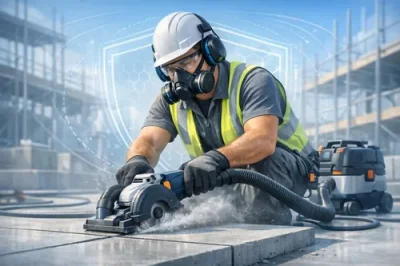
Cutting, grinding, drilling, chasing, polishing or demolishing materials such as concrete, bricks, pavers, tiles and stone can create respirable dust, and regulators are continuing to emphasise controls, supervision and evidence of safe work practices.
For tradies, this is not only a work health and safety issue. It can also affect how insurers view risk, how claims are assessed and what information a business may need to provide at renewal. A small contractor that can show practical controls, such as wet cutting, on-tool extraction, suitable respiratory protection, training records and maintenance logs, is in a stronger position than one relying on informal habits.
The insurance connection is clearest where illness, injury or third-party exposure is alleged. Workers compensation arrangements, income protection, management liability, statutory liability and public liability can all raise different questions depending on who was exposed, where the work occurred and whether the business followed required controls. Cover is never a substitute for compliance, but poor documentation can make an already difficult claim more complicated.
Trade businesses should also remember that silica risk is not limited to large construction sites. A sole trader cutting bathroom tiles, a landscaper working with pavers, a concreter grinding slab edges or an electrician chasing walls can all create exposures. Subcontracting can add another layer, because head contractors and principals may ask for proof of insurance, safe work method statements, dust management procedures and evidence that workers have been trained.
Practical steps to consider include:
reviewing which tasks create dust and whether safer methods are available;
checking that equipment, extraction systems and masks are suitable and maintained;
keeping training, fit-testing, incident and maintenance records in one place;
confirming who is responsible for controls when working under another contractor;
reading policy exclusions, notification obligations and occupation descriptions before renewal.
The broader lesson is that insurers increasingly want to understand how a trade business manages known risks, not just what trade category appears on a proposal form. Clear procedures and accurate disclosure can help avoid surprises later.
As silica regulation becomes part of routine site management, tradies should treat dust controls as part of business continuity. The right insurance settings matter, but they work best alongside safe systems, good records and a realistic understanding of the work being performed.
Please Note: We do not endorse any specific products or companies. Some content is sourced from third parties, including press releases, and may not be independently verified for accuracy or completeness.
Australia's construction sector remains under pressure, with recent insolvency figures continuing to show building and construction as one of the most exposed parts of the economy. Higher material costs, tight margins, labour shortages, delayed payments and fixed-price contract stress have all contributed to a tougher operating environment for builders, subcontractors and project owners. - read more
Recent transport industry sales updates point to a more selective new-truck market, with operators weighing replacement timing against finance costs, emissions planning, availability and contract confidence. For truck businesses, that matters well beyond the showroom. A change in buying momentum can flow through to vehicle values, repair economics, insurer appetite and the way fleets should set insurance sums before renewal. - read more
Fresh small business cyber warnings are a practical reminder that digital risk is no longer just a concern for large companies with complex IT systems. For Australian tradespeople, the most damaging cyber incident may be far simpler: a fake invoice, altered bank details, a compromised email account or a scam message that looks like it came from a supplier, builder, real estate agent or client. - read more
ASIC’s continuing focus on superannuation member services has put another practical issue in front of Australian workers: insurance inside super is not just about whether cover exists, but whether members can understand and use it when they need help. Recent regulatory attention on trustee administration, communication and claims support is a timely reminder for anyone relying on salary continuance or income protection benefits through their fund. - read more
Professional indemnity insurance stands as a pivotal safeguard for Australian professionals navigating the intricacies of liability in their work life. This form of insurance is designed to protect professionals against legal costs and claims for damages arising from acts, omissions, or breaches of professional duty in the course of their practice. Whether it's due to an honest mistake or an unforeseen error, the ramifications of such professional oversights can be financially crippling. - read more
Public liability insurance can help protect a business when a third party alleges they were injured or their property was damaged because of the business's activities. If an incident occurs, knowing what to document, when to contact your insurer and how to communicate with others involved can make the claims process easier to manage. - read more
Product liability insurance can help protect Australian businesses from the financial impact of claims alleging that a product they manufactured, imported, distributed or sold caused injury, illness or property damage. This guide explains how the cover works, what to check in a policy and how it fits into broader product risk management. - read more
Public liability insurance can help protect a business if a member of the public alleges injury or property damage connected with its operations. Premiums are only one part of the decision: cover limits, exclusions, excesses, risk management and claims support all matter. This guide explains practical ways Australian businesses can review their public liability insurance costs without simply stripping out important protection. - read more
Start Here !
Knowledgebase
Insurance broker: An agent acting on behalf of the insured (not the insurance company) who negotiates the terms and cover provided by the insurer in the insurance policy.






No comments yet. Be the first to share your thoughts.